Evaluating Corrugator Starch Adhesive Quality to Prevent Delamination
Controlling the chemical formulation of starch adhesives on the corrugator line is critical to securing solid bonding between flute tips and paperboard liners.
1. Cassava Starch Adhesive: Natural, Sustainable Bonding
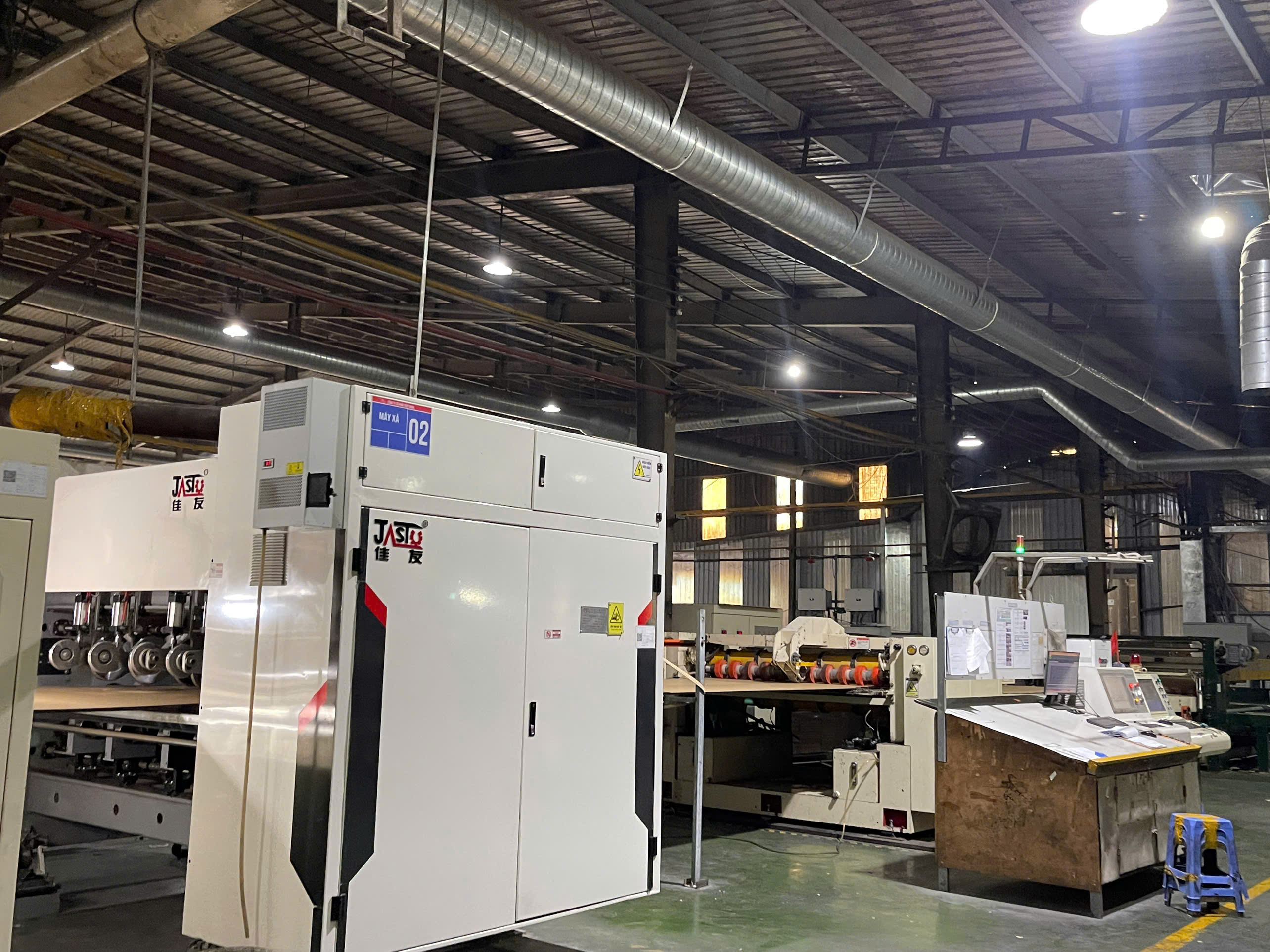
Tien Thanh A&E utilizes natural cassava starch adhesives to run our heavy-duty German BHS Q230 corrugator line:
-
Chemical Components: Pure cassava starch, water, sodium hydroxide (NaOH) to control swelling temperature, and minimal borax to boost green tack strength and speed up heat setting under pressure.
-
ESG Compliance: Natural starch adhesives are 100% biodegradable and compostable, matching ESG sustainable manufacturing guidelines and FSC forestry audits.
2. Standardized Chemical Benchmarks of Starch Adhesive at Tien Thanh
Our chemical control lab monitors key parameters of every adhesive batch before pumping it to the glue pans:
-
Adhesive Viscosity: Measured using a Stein-Hall viscosity cup. The target range is 30 to 45 seconds. High viscosity prevents uniform spreading along flute tips, whereas low viscosity spreads excessively, wetting the board and causing soft boards.
-
Gelatinization Temperature: The temperature at which the liquid starch slurry cooks into a solid polymer gel. The target gelatinization range is 58 - 62°C, ensuring rapid curing upon contact with steam-heated corrugating rolls heated to 160°C.
-
Solids Content: Maintained between 20% and 25% by weight to guarantee high structural dry bond strength after moisture evaporates.
3. High-Tech Adhesive Management System
-
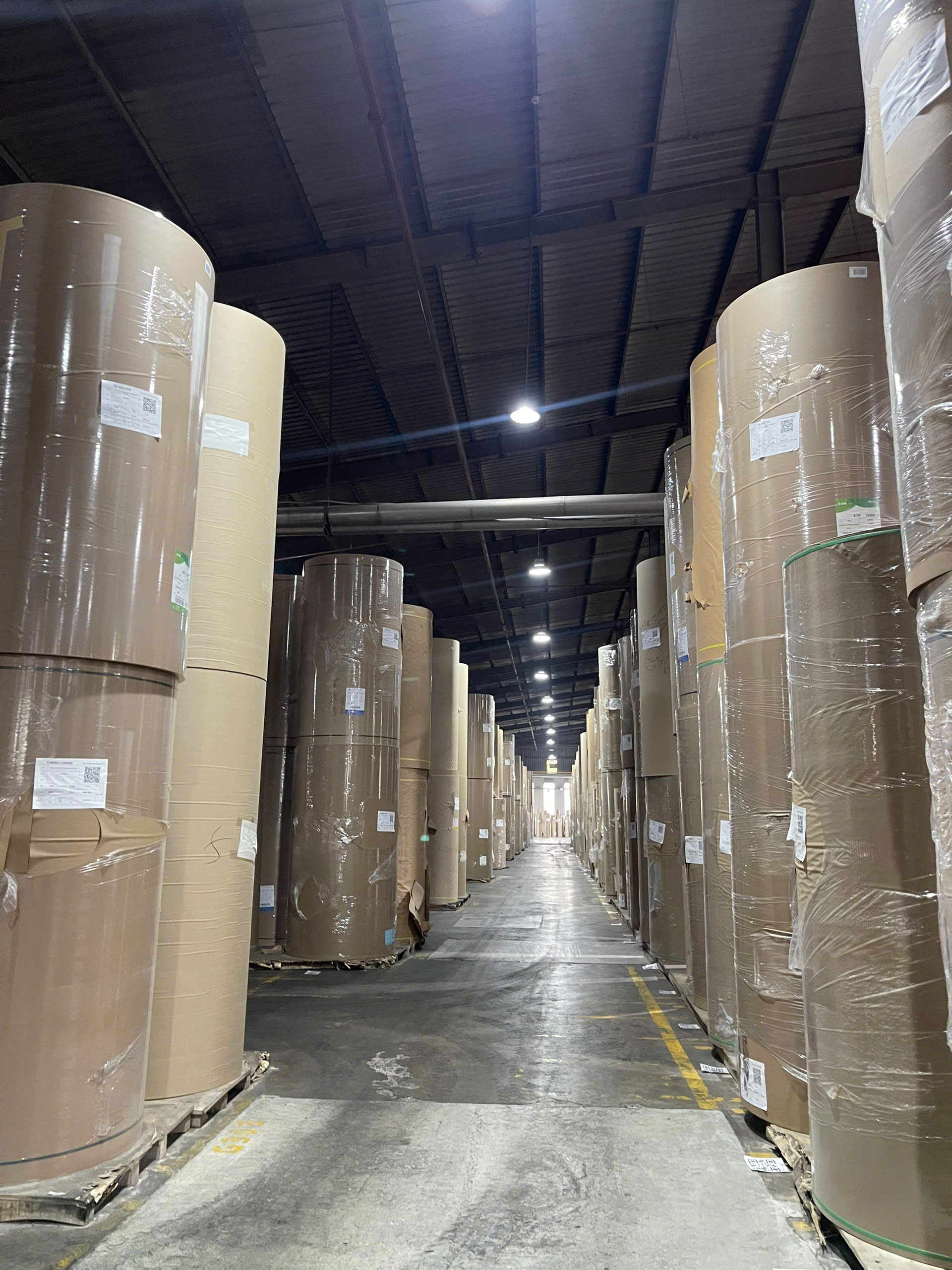
Continuous Agitator Storage Tanks: Prepared starch adhesive is stored in insulated tanks with automated paddle agitators, preventing starch precipitation and viscosity degradation.
-
Poka-Yoke Adhesive Monitors: Sensors scan glue roll film thickness continuously. If dry areas or starved glue film occur, the system alerts operators immediately, eliminating unbonded packaging errors in B2B batches.
---